Root Canal Treatment
The treatment of an inflamed or infected tooth aims to eliminate the cause of the symptoms and, whenever possible, preserve the natural tooth.
The goal is to preserve your natural tooth
During root canal treatment, by removing the inflamed or infected tissues from inside the tooth and treating the root canals, we aim to preserve the natural tooth.
"The goal of root canal treatment is not only to reduce symptoms, but whenever possible to preserve the natural tooth long-term and restore it appropriately."
What problems can root canal treatment solve?
Severe, throbbing toothache, persistent sensitivity to hot or cold, pain on biting, or swelling around the tooth may indicate that the tissues inside the tooth are inflamed or infected. In such a case, root canal treatment may become necessary to eliminate the source of the infection and, whenever possible, preserve the natural tooth.
Tooth-preserving treatment based on a personalized plan
At Györe Dent, root canal treatment is always preceded by an examination and, when needed, imaging diagnostics. During the treatment we access the inside of the tooth, remove the inflamed or infected tissues, clean the root canals, and seal them appropriately. After the treatment, the method of the tooth's final restoration is also tailored to the given tooth's condition.
Book AppointmentWhen might root canal treatment be needed?
Root canal treatment may become necessary when the dental pulp inside the tooth can no longer recover due to inflammation or infection.
- In case of severe or persistent toothache
- Prolonged sensitivity to hot or cold
- In case of deep tooth decay
- Inflammation or infection affecting the tooth interior
- After trauma or significant tooth structure loss when indicated
The first step is always an accurate diagnosis
Without a precise assessment of the cause of the symptoms and the tooth's condition, it cannot be determined whether root canal treatment is truly necessary. The personal examination may be complemented by imaging diagnostics when needed.
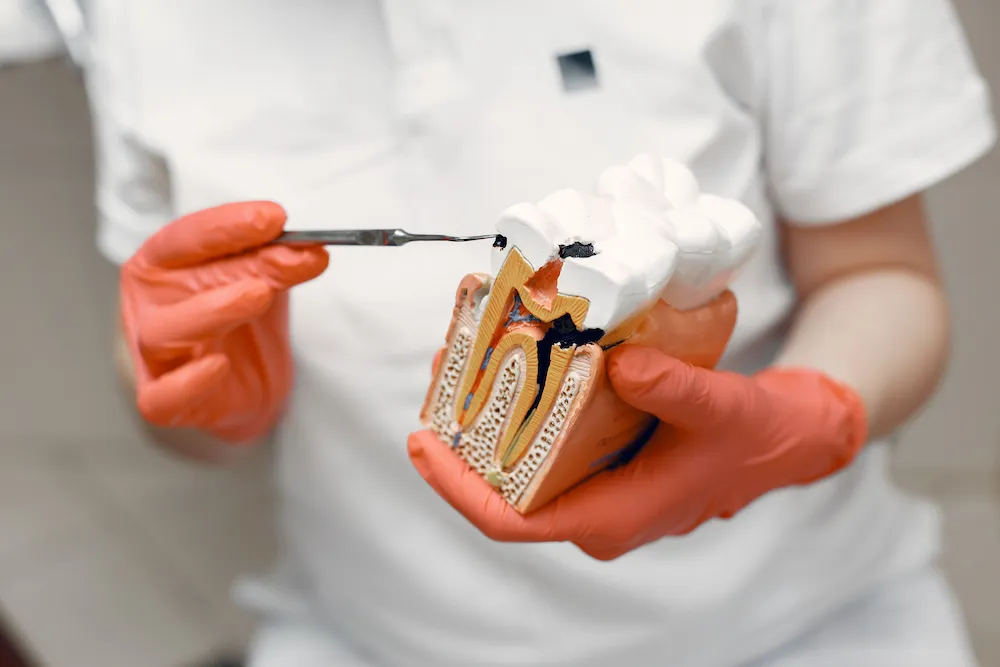
What is the exact course of treatment?
Step by step
Anesthesia & preparation
We begin treatment under local anesthesia when needed, then create access to the root canals inside the tooth.
Cleaning the root canals
We remove the inflamed or infected tissues, then clean and prepare the root canals.
Root filling
We seal the properly cleaned root canals to reduce the possibility of re-infection.
Final restoration of the tooth
After root canal treatment, depending on the affected tooth's condition, a filling, an inlay/onlay or another appropriate final restoration may be made.
Why choose us?
Careful diagnostics and a tooth-preserving approach
Accurate assessment
The necessity of root canal treatment is determined on the basis of a personal examination and, when indicated, imaging diagnostics.
Tooth-preserving approach
The aim of the treatment is to preserve the natural tooth whenever clinically possible, alongside treating the inflammation or infection.
We think about the final restoration too
Root canal treatment does not end the process: a final restoration tailored to the affected tooth's condition also needs to be taken care of.
Our Clinic in Szeged
Györe Dent welcomes patients at Déryné u. 17 in Szeged for an assessment before root canal treatment and tooth-preserving care. The appropriate treatment direction is always determined on the basis of a personal examination.
Related treatments
Frequently asked questions about root canal treatment
The most important things to know before and after root canal treatment.
Is root canal treatment painful?
When is root canal treatment necessary?
How many appointments does root canal treatment take?
What happens to the tooth after root canal treatment?
Can every tooth be saved with root canal treatment?
Might an X-ray be needed before root canal treatment?
Don't postpone examining a problematic tooth
Book an appointment so that, based on a personal examination, we can determine whether root canal treatment is needed and what solution represents the right next step for you.